Meet Arif: Living Life on His Own Punk Terms
This English version was translated by AI. Open for volunteer translator contributors!
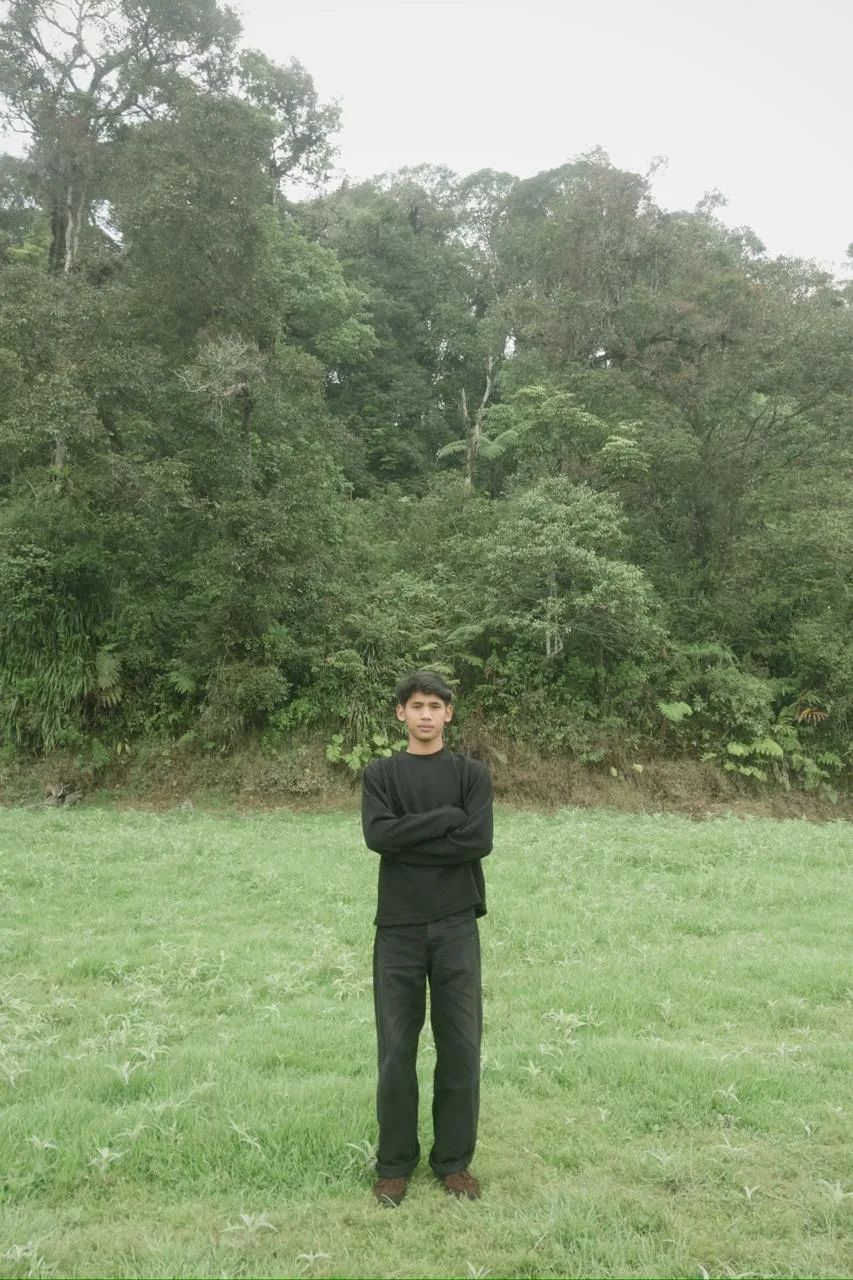
The opening of this blog series is an introduction session with Arif, a 19-year-old who is active in the skateboarding scene at the skatepark under the Pasupati bridge in Bandung. More than just enjoying riding his board, Arif contributes to the mission of producing great skateboarders out of the “kolong”, the local name for the skatepark under Pasupati. Arif regularly teaches students of various ages, genders, and beginner-to-intermediate levels. “I teach not only for the extra money — my parents don’t support me anymore — I feel satisfied and proud when my students get it. Some were really scared at first, and now they can drop in on their own and want to try this and that trick,” Arif explains enthusiastically. Arif does come to Pasupati skatepark regularly. He is willing to help students who show up outside the lesson schedule, at no extra charge.
Arif usually starts his day at 5 a.m. and ends it at 11 p.m. Within those hours he has arranged his schedule so that every priority is met. He has to divide his time between social life, love, college, and the work that covers his daily needs. Beyond teaching skateboarding, Arif works part-time at a pizza restaurant and also runs a business. The business he is in is buying and selling skateboards along with their parts, streetwear clothing, and board rental priced at 15,000 rupiah per hour. The business is called TUP (Triumph Under Pressure), and he runs it with his older brother, Hadi. Besides Hadi, he also runs it with his uncle, known as Om Firman. Om Firman was the one who encouraged Arif to get to know skateboarding back when Arif was in the second year of vocational high school. Rather than just trying it, Arif decided to commit to it.
Hearing the whole run of Arif’s activities at his young age, I could only look back on the youth I lived without making many positive things. As he explained his principle of always prioritising what is useful for himself — in the good sense, of course — I thought that Arif is someone very far from the stereotype of the average skateboard kid, and Arif agreed with that. Take his view on cigarettes and alcohol. Amid the cigarette smoke surrounding his crew’s hangout, Arif holds firmly that cigarettes have no benefit at all for his body. He even argues that smoking would lower his performance in skateboarding and in running his packed routine. And he has never felt drawn to alcohol, again because he sees no benefit in it.
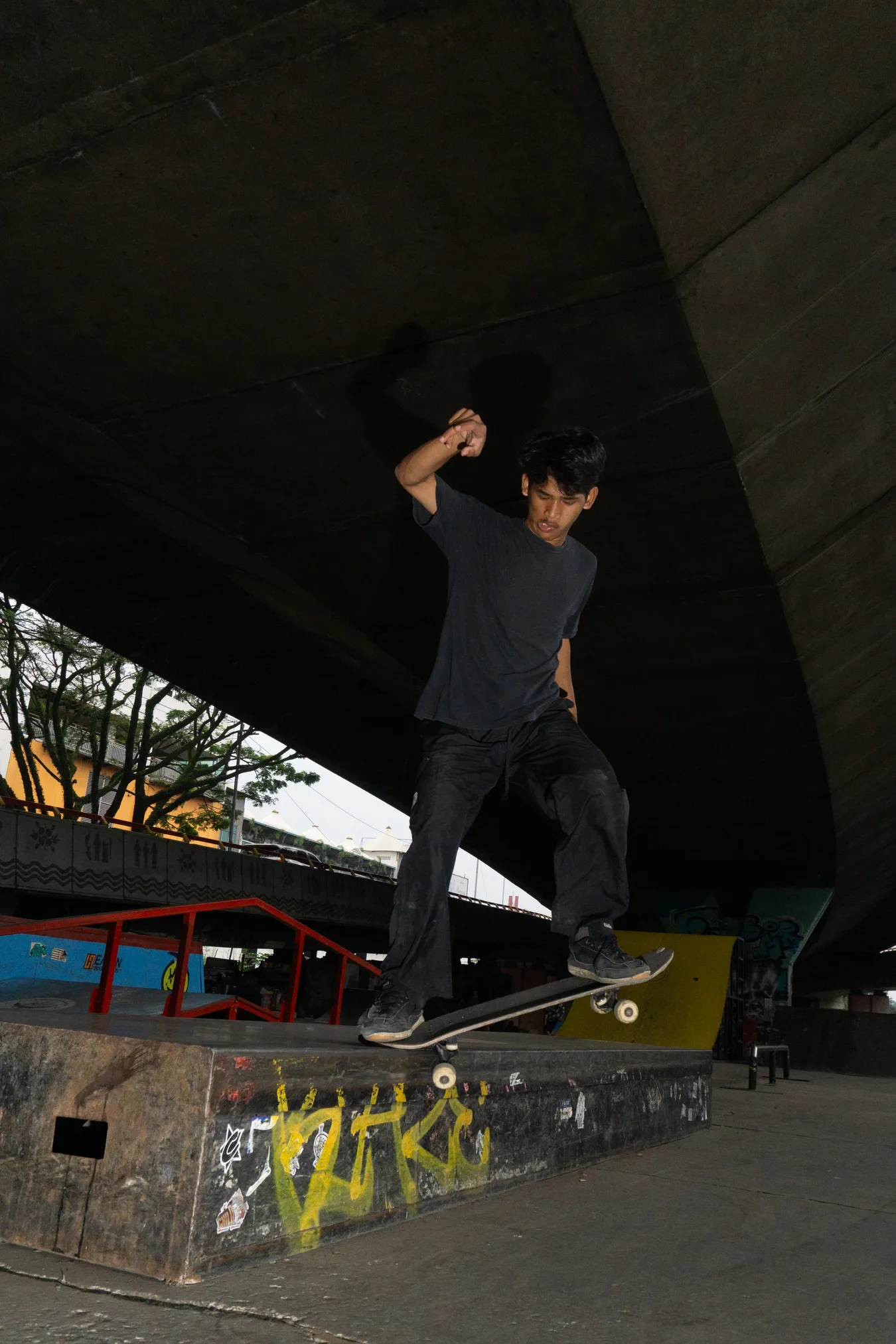
Besides admiring the principles Arif holds, I also wondered whether Arif had ever grown tired of all of it? Or does he actually enjoy it? “Tired? Of course. But there is always something that gets me back on track. Besides family — because I also help their finances a little — it is always being grateful.” Okay, hearing “grateful” sounds a bit clichéd. But then Arif continued, “Not everyone can have what I have now; being able to make money from something I love. Out there a lot of people struggle to find work, and some are even forced to make money in a field they don’t like at all.” His words are simple, but they run deep, because we live in an era where, if we want to survive, our choices are not many. Out there, many people are even willing to do things that clearly contradict their moral compass just to survive. We never imagine that such things are now very close to our own lives. Perhaps one day it will be our turn.
As is usual at the end of an interview, I asked Arif what hopes he has for his future. With a mountain of commitments eating up the idle time of his youth, I assumed Arif would mention a hope for great success (re: riches). Then Arif said it, “I just want my friends in the skate scene under here, the ones who are already good, to be able to teach beginners too. Because right now there are only a few who teach. Besides producing more skateboarders, it would also add a little to their income. I also want my clothing line to be better known. Hopefully one day there will be someone who can market my merchandise. So more people know about it, not just the kids around here.” Arif could be said to be far from the “punk” stereotype so closely tied to skateboard culture. But Arif lives out his own meaning of “punk”. That night the interview stopped there. Arif went back into the skatepark, helping beginners skateboard even though it was not his teaching schedule.